
October 2026-2
Meet the Volunteers: Tina and the First Steps to Plot Life
Every allotment journey starts somewhere, and for many new plot holders, it starts with Tina.
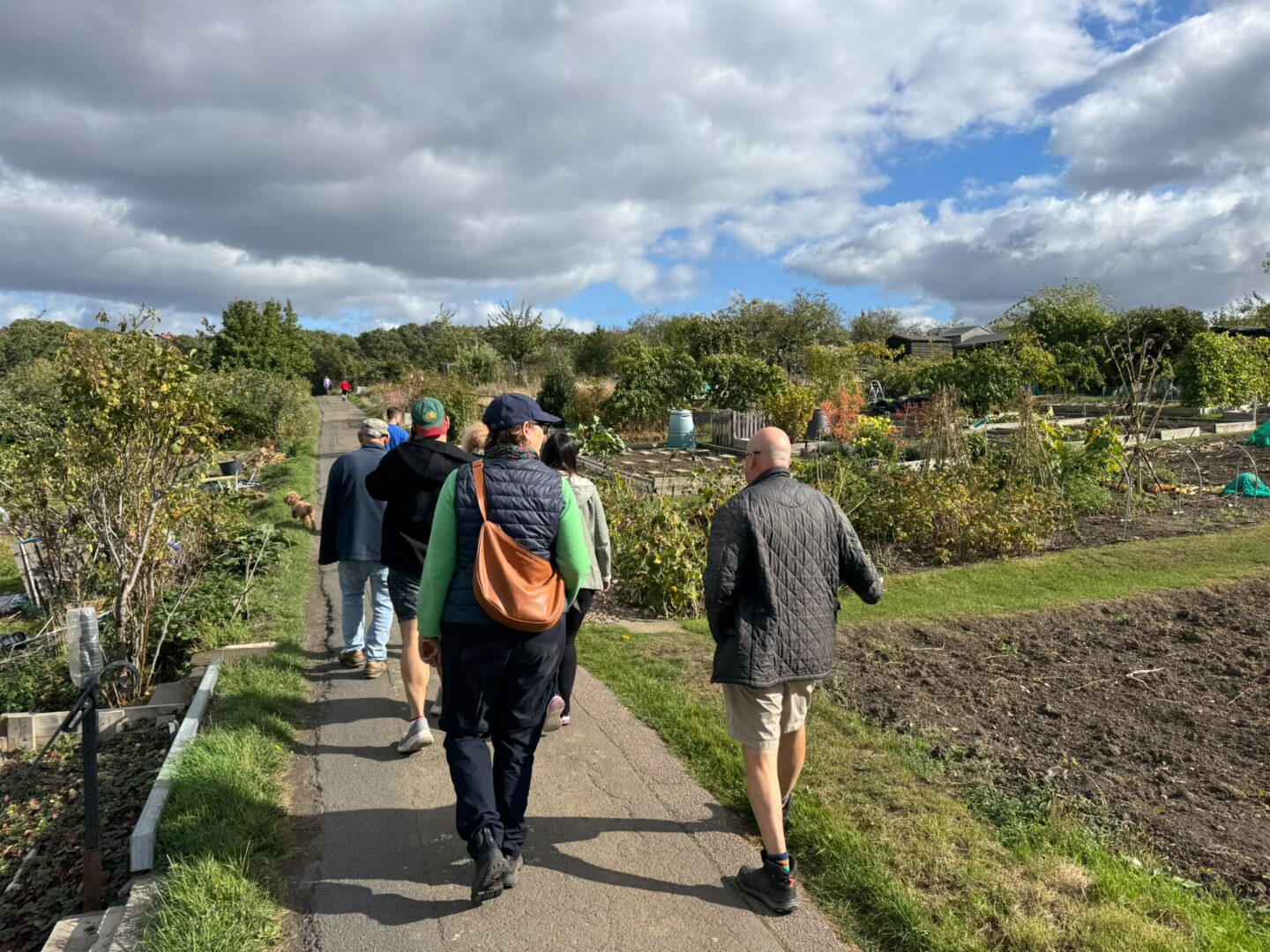
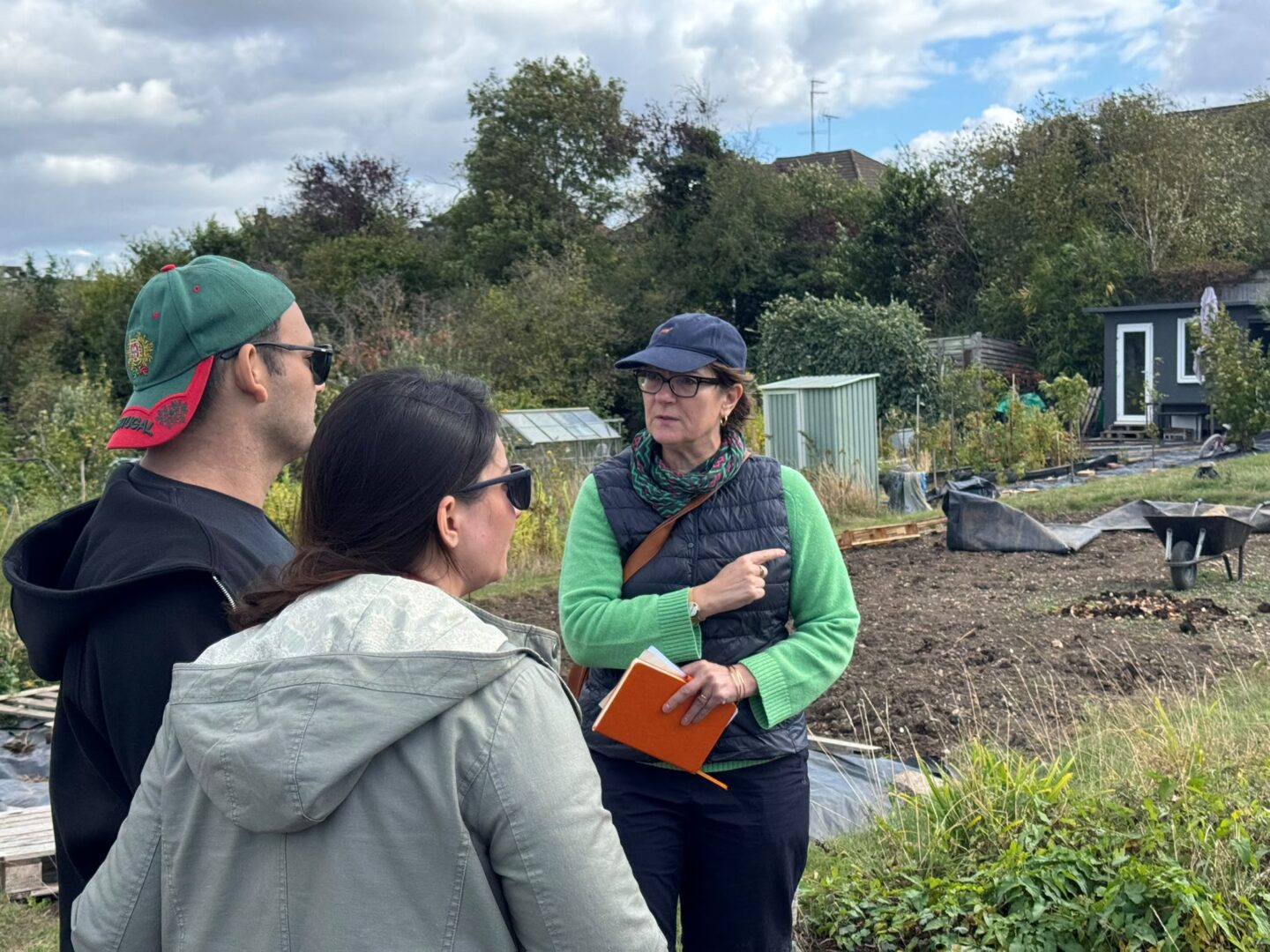
On a sunny, if slightly blustery, Saturday afternoon in October, I joined committee volunteer Tina as she welcomed some prospective new plot holders to the site. Among them were two couples, a young family with their two children, and a particularly happy dog who seemed to be enjoying the visit as much as anyone.
Before heading out to see the available plots, we gathered around the table in the community shed for a chat about what taking on an allotment actually involves, and Tina didn’t sugar-coat it.
Allotments are lovely places, but they’re hard work. They take time, patience and commitment, especially if you’re inheriting a plot that needs attention. She wanted everyone to understand the responsibilities as well as the rewards before deciding anything.
From Plot Holder to Committee Volunteer
Tina took on her plot in December 2019, a few months before the world went into lockdown. What she couldn’t have known at the time was just how valuable her new little patch of land would become.
During the pandemic, the allotment gave Tina and her husband somewhere to escape to, spend time outdoors and enjoy a bit of normality during an otherwise very strange period.
In January this year, Tina decided to get involved with the committee. When I asked why, she said there simply weren’t enough people helping, and too much was falling on too few volunteers. As a plot holder, she felt she should take some of that on. When the committee split its work into more manageable roles, Tina took on new plot lettings.
So, What Does Taking on a Plot Actually Involve?
Back in the community shed, there were plenty of questions. Who clears the weeds before someone takes over? What happens if you can’t manage a plot for a while? Is a full plot twice as much work as a half plot? And, with one particularly enthusiastic four-legged visitor among us, what are the rules around bringing dogs onto the site?
Tina talked everyone through the practicalities, explaining that new plot holders are responsible for preparing their own ground, whether that’s clearing weeds, creating compost heaps or arranging to dispose of green waste. On the question of full versus half plots, her view was interesting. While a full plot might mean more work initially, once it’s established and you’re keeping on top of things regularly, the difference in ongoing maintenance might not be as significant as people imagine.
As for dogs, they’re very welcome, provided they’re kept under control and don’t wander onto neighbouring plots.
Tina also stressed the importance of communication. If circumstances change and someone temporarily struggles to maintain their plot, the important thing is to talk to the committee rather than simply disappearing and letting the weeds take over.
After our chat, we headed outside to explore the available plots. Tina shared a little of their history, including stories of the people who had tended them previously. It’s easy to forget that every plot has a history, and that today’s empty patch of ground might once have been somebody else’s pride and joy.
You Don’t Have to Be a Good Gardener
One of my favourite things Tina said came when I asked her what makes a good allotment tenant.
“You don’t have to be a good gardener, but you do have to be committed.”
As Tina pointed out, we have people on site with vastly different levels of gardening experience. Some have been growing for decades, while others are figuring things out as they go. What matters isn’t whether you know your potatoes from your parsnips on day one. It’s whether you’re willing to turn up, put the effort in and learn along the way.
That’s also why Tina encourages anyone interested in taking on a plot to have a plan. Nothing elaborate, just an idea of what they’d like to achieve and how they intend to get started. If prospective plot holders decide to apply following their tour, she asks them to explain that plan in their follow-up email. It’s an opportunity to show they’ve thought seriously about what they’re taking on.
A Little Advice From Tina
Of course, I couldn’t leave without asking Tina what advice she’d give someone starting their first allotment.
First, don’t rush to dig everything up. When she took on her plot, one of the first things Tina did was buy Charles Dowding’s book on no-dig gardening, and she’s used the method ever since. It’s easy to take on an overgrown plot, get carried away with a spade and put your back out before you’ve planted a thing.
Second, ask for help. There’s a lot of gardening knowledge on site and plenty of people happy to share it. If your seedlings are struggling or something is eating your cabbages, someone a few plots away has probably dealt with the same thing.
More Than Just Growing Vegetables
By the end of the visit, our prospective new plot holders had a much clearer picture of what allotment life might look like, from the initial work of clearing a plot to the satisfaction of eventually harvesting something they’ve grown themselves. For some, the visit might be the beginning of years of growing. Others might decide now isn’t quite the right time, and a visit like this is a good way to find that out before taking on a plot.
Spending the afternoon with Tina was a reminder of how much goes on behind the scenes to keep our allotments running. Showing prospective plot holders around might seem like a small job, but it’s an important part of welcoming new people onto the site. And like so many other jobs around the allotments, it relies on volunteers giving up their own time.
So, thank you to Tina, not just for letting me tag along, but for taking on a role that helps keep things running.
Adam
October 2026-1
A Wonderful Turnout for This Year’s Harvest Party
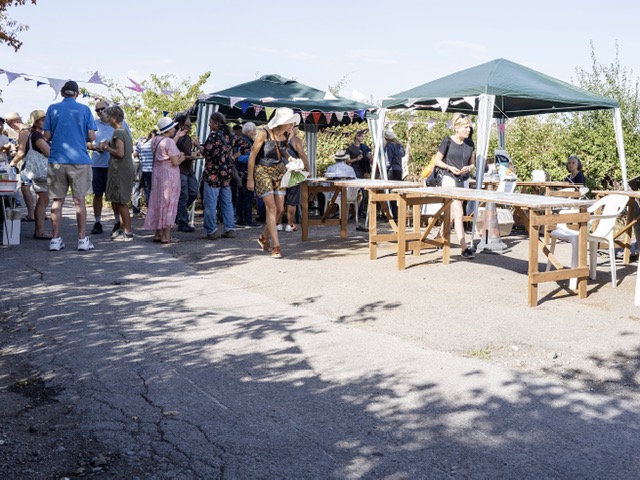
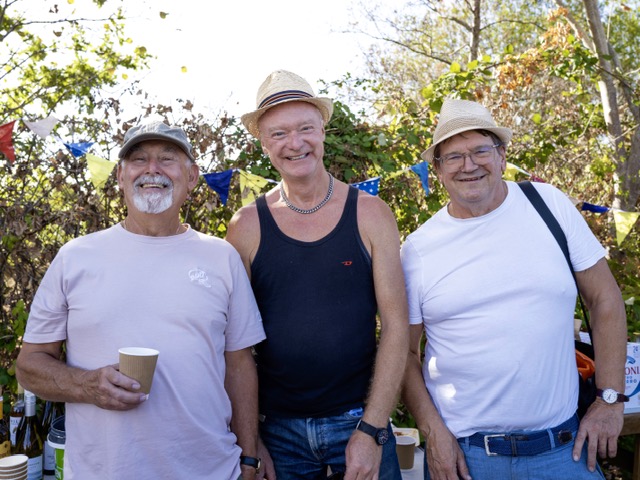
We had a wonderful turnout for this year’s harvest party.
The weather held, which is never a given, and by the middle of Sunday afternoon there was a good crowd on site. Awnings up, bunting strung between them, chairs out, and people drifting from one table to the next with a drink in hand. It had the easy feel of an afternoon nobody was in a hurry to leave.
That ease takes a surprising amount of work beforehand. Pat, David, John and Deb had the whole thing standing before the first guest arrived: awnings up, chairs out, cones round the car park. Pat and David also sorted the drinks, with something for the drinkers and non-drinkers alike, which is the kind of quiet job you only notice when it hasn’t been done.
There was no barbecue this year, the dry weather making it a bit too risky, so it was finger food throughout, and no one seemed to mind. The two Lizes led the charge with cheese and biscuits, flatbreads and hummus, and once Maxine and many others had added their bits, the table was well past the point of anyone going hungry. It was great to see so many delicacies made with our own produce.
Laura’s apple press was where a lot of the afternoon happened. The site’s surplus apples went in, people took their turn on the handle, and juice came out the other end, which is oddly good fun!
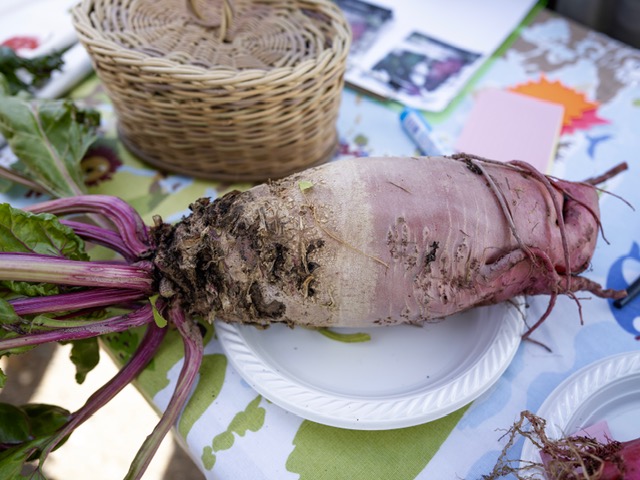
The surplus and interesting produce table pulled its usual crowd, and this year the mangelwurzels stole the show. If you’ve never seen one up close, it’s worth knowing your neighbours are growing things that size a few plots over.
There was more to wander round beyond the food. Ben ran a table on water quality, and Anna presented some information regarding the cats. There are several on site at the moment looking for homes, a couple of litters among them from over the summer, and the group could do with more hands, so anyone with a bit of time to spare would be welcome.
The one thing we missed this year was music. If you play something, or know someone who does, have a word with the committee. It would be lovely to have a bit of live music going at the next event.
Like most things here, the day ran entirely on volunteers: the people who set up the tables, brought the food, lent the gear and stayed behind to pack it all away. Thanks to every one of them.
We hope you all had a wonderful day.
Adam
September 2026
The Community Shed is Having an Upgrade!
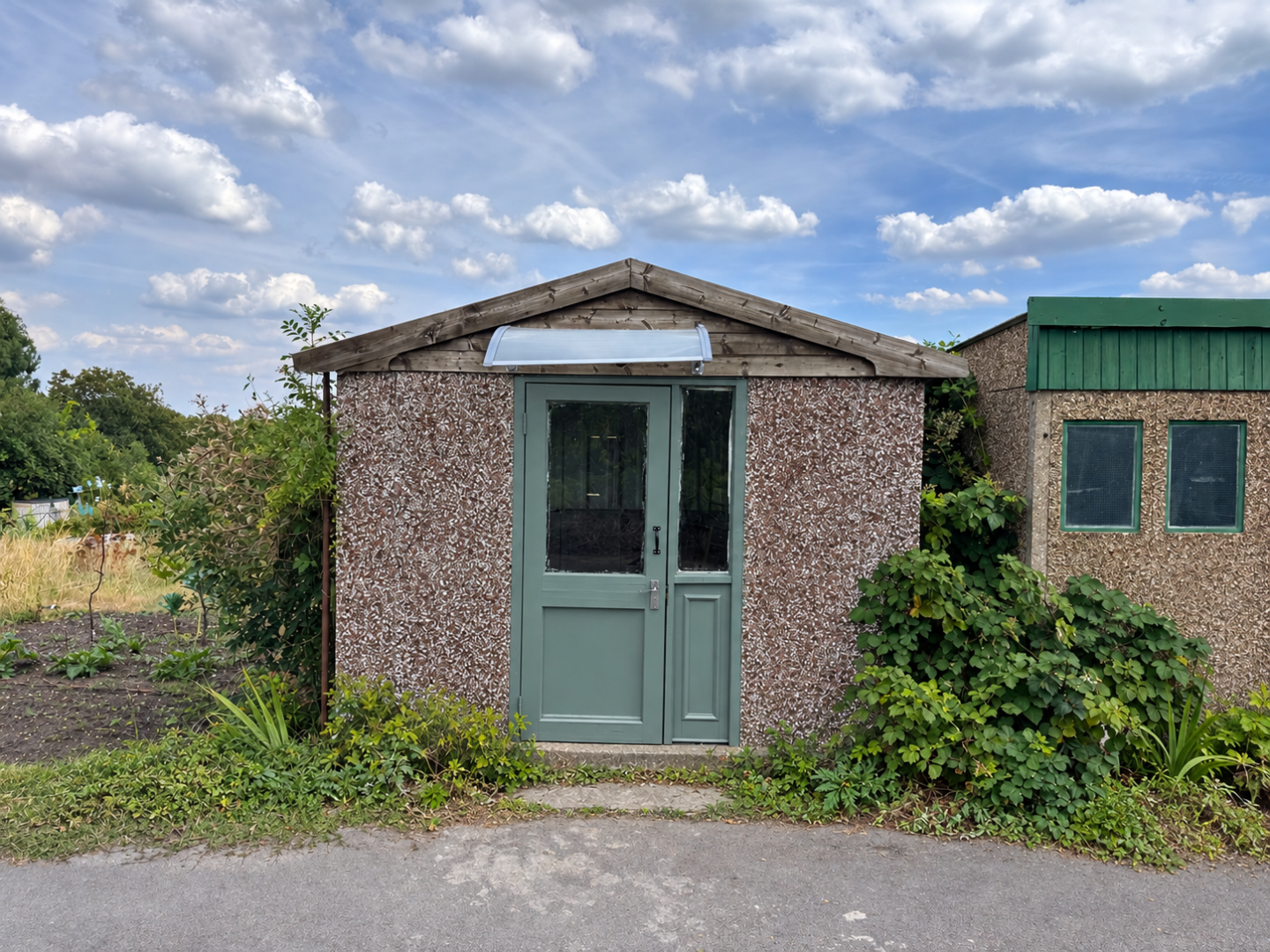
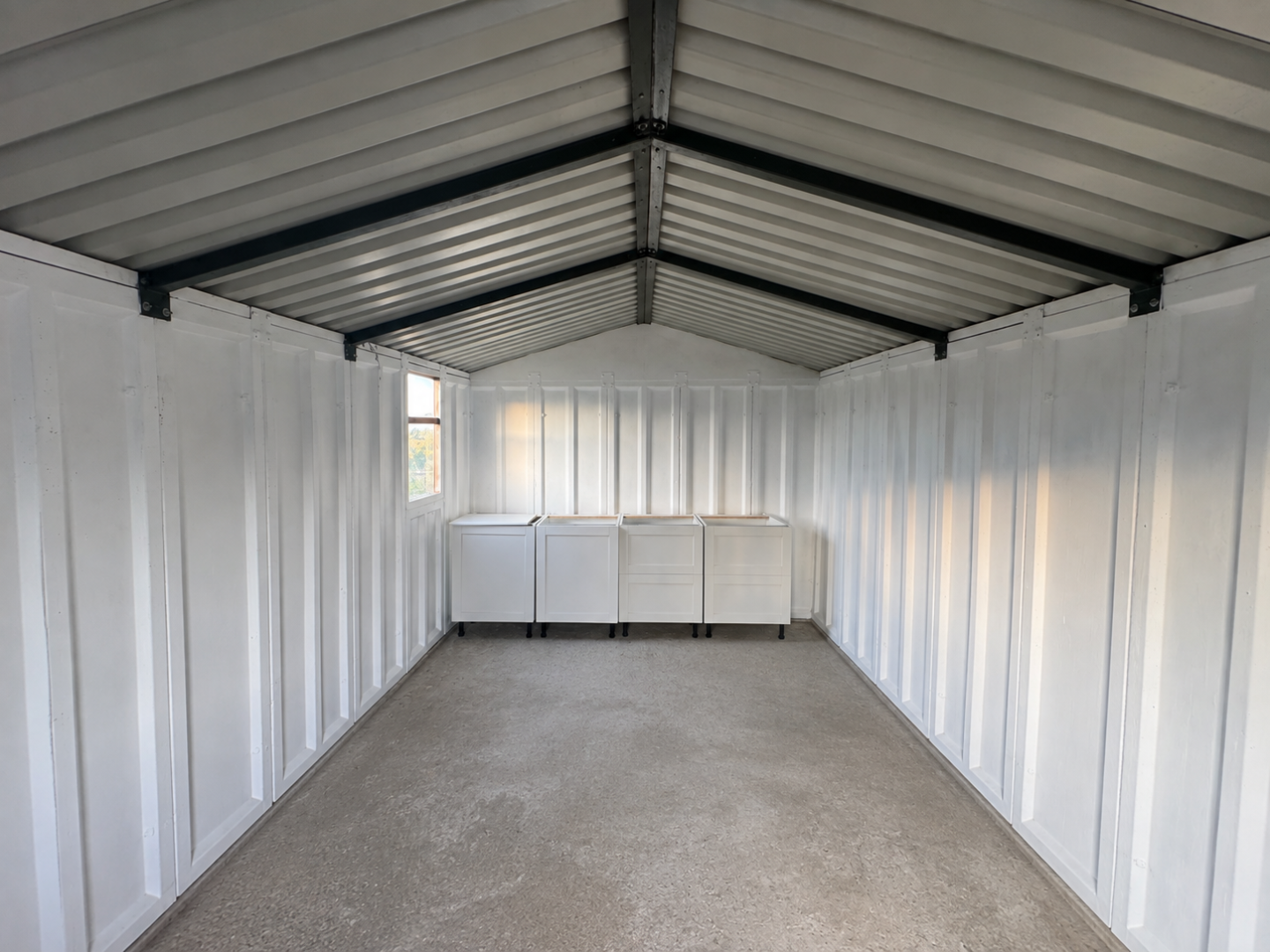
If you’ve walked past the Community Shed lately, you’ll have noticed it’s had a fresh coat of paint. That’s the first sign of a bigger project that’s now well underway: turning the shed from a place we casionally hold meetings into somewhere the whole site can actually use.
The work is being done by two of our volunteers, both named David. The repaint is their handiwork, done quietly over a few weekends with no fuss made about it.
The idea came from David P. He’d noticed the little groups that form around the site when people stop for a break…two or three plot-holders leaning on a fork, a cup of tea on the go (sometimes something a bit stronger). He liked seeing it, and thought the site could do with a proper place for it to happen. At the moment the shed is used for the odd meeting and not much else, which feels like a waste of a good building.
So here’s what’s planned.
First, a small kitchenette. Nothing elaborate, just somewhere to boil a kettle, sit down for ten minutes, swap stories or hand over the courgettes that grew faster than you could use. After that, there are plans for some solar panels to help power the place.
Further down the line we’re looking into broadband, which would mean the site could finally take card payments. Broadband on an allotment may sound like a step too far, but anyone who’s stood there patting their pockets for a fiver will see the appeal. One thing at a time, though.
David B has suggested a nice touch to go with it: a little bell outside the shed that can be rung when the kettle’s on, so everyone knows there’s tea going. Imagine that on a cold morning halfway up the site, the bell might be the best sound you hear all day!
The longer-term hope is that the shed becomes somewhere we naturally gather for things like workshops, AGMs, seed swaps, summer events, and the odd barbecue when the weather allows.
Most of what makes being part of an allotment community enjoyable happens in the gaps between the digging, and until now there hasn’t really been anywhere for it to happen.
None of the work taking place is happening through funded contractors. It’s happening because our volunteers turned up with brushes and some tools and gave up their own weekends, because one of them looked around and thought the site could do a little better. That’s true of most of what gets done here.
So if you see one of the two Davids at work over the coming weeks, do say hello, and a thank you wouldn’t go amiss. The site keeps getting better because people are willing to put the time in, and this is one of those times.
We’ll share some photos once it’s all complete!
Adam